


H68 Brass is a copper-zinc alloy compliant with the Chinese National Standard GB/T 4423-1992. The following presents its key characteristics, chemical composition, mechanical properties, and processing guidelines. The original content has been technically revised and supplemented to align with international engineering terminology.
: 67.0 – 70.0 %
(e.g., Lead, Iron, Phosphorus, Antimony, Bismuth): Total <= 0.3 %
: >= 370 MPa
δ5 (Gauge length 5x diameter): >= 18%
δ10 (Gauge length 10x diameter): >= 15%


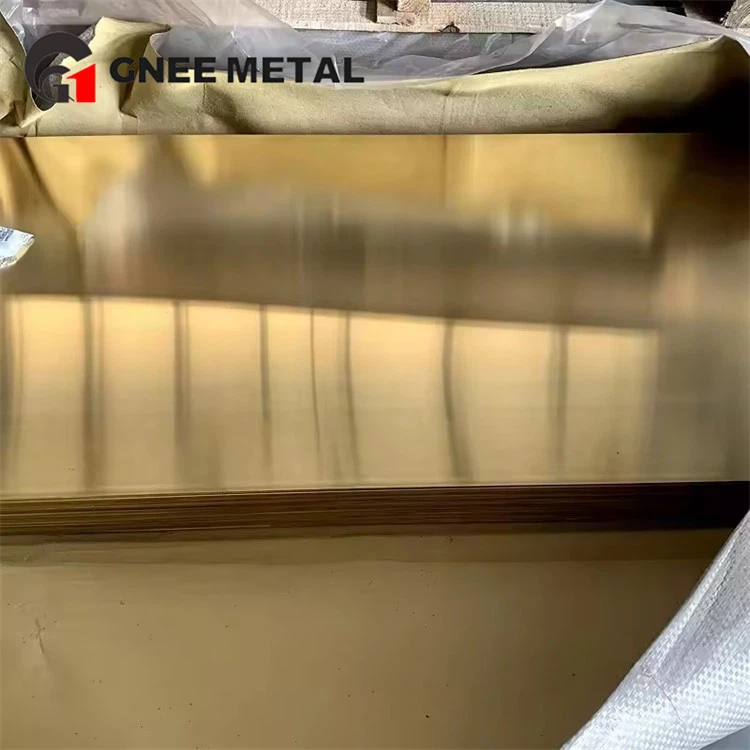

H68 brass offers a favorable combination of mechanical strength, excellent plasticity (formability), and good machinability. It exhibits satisfactory hot workability and stable weldability. However, it is susceptible to stress corrosion cracking in certain environments.
Complex cold-stamped and deep-drawn components
: 750 – 830 ℃
: 520 – 650 ℃
Stress Relief Annealing (Low-Temperature): 260 – 270 ℃
Our factory is equipped with an advanced full-process copper processing production line, specializing in the manufacturing of high-precision copper plates, copper tubes, copper rods, copper wires, and copper strips. The core of our production includes continuous casting and rolling units, precision extrusion lines, high-speed cold rolling equipment, multi-roll precision rolling mills, tube drawing systems, and intelligent stretching production lines. We are also outfitted with comprehensive inspection equipment such as spectrometers and online eddy current flaw detectors, ensuring full-process control from smelting and casting, hot processing, to cold finishing. Our products achieve an accuracy of up to ±0.01mm, with an annual production capacity exceeding 50,000 tons. They are widely used in power, electronics, transportation, and high-end manufacturing sectors. Certified with international standards such as ISO9001 and IATF16949, we are capable of providing global customers with one-stop copper material solutions.

We implement a graded and customized packaging system: copper plates are double-wrapped with moisture-proof paper and vapor corrosion inhibitor film before being placed in reinforced wooden crates, which are filled with cushioning materials and equipped with impact-resistant corner protectors; copper tubes and rods are sealed with plastic end caps, wrapped with PE protective film, and then layered into steel-frame logistics containers, with EPE pearl cotton separating each layer; copper wires are automatically wound onto spools, vacuum-sealed, covered with waterproof film, and secured on customized iron-wood pallets; copper strips are wrapped with non-woven fabric, coiled onto high-strength steel cores, and placed into waterproof composite material coils with desiccants inside. All packaging passes ISTA-3A transport testing, and the outer boxes are labeled with international hazardous material identifiers, moisture warnings, and scannable logistics codes, ensuring the cargo withstands moisture, impact, and chemical erosion during global transportation.


